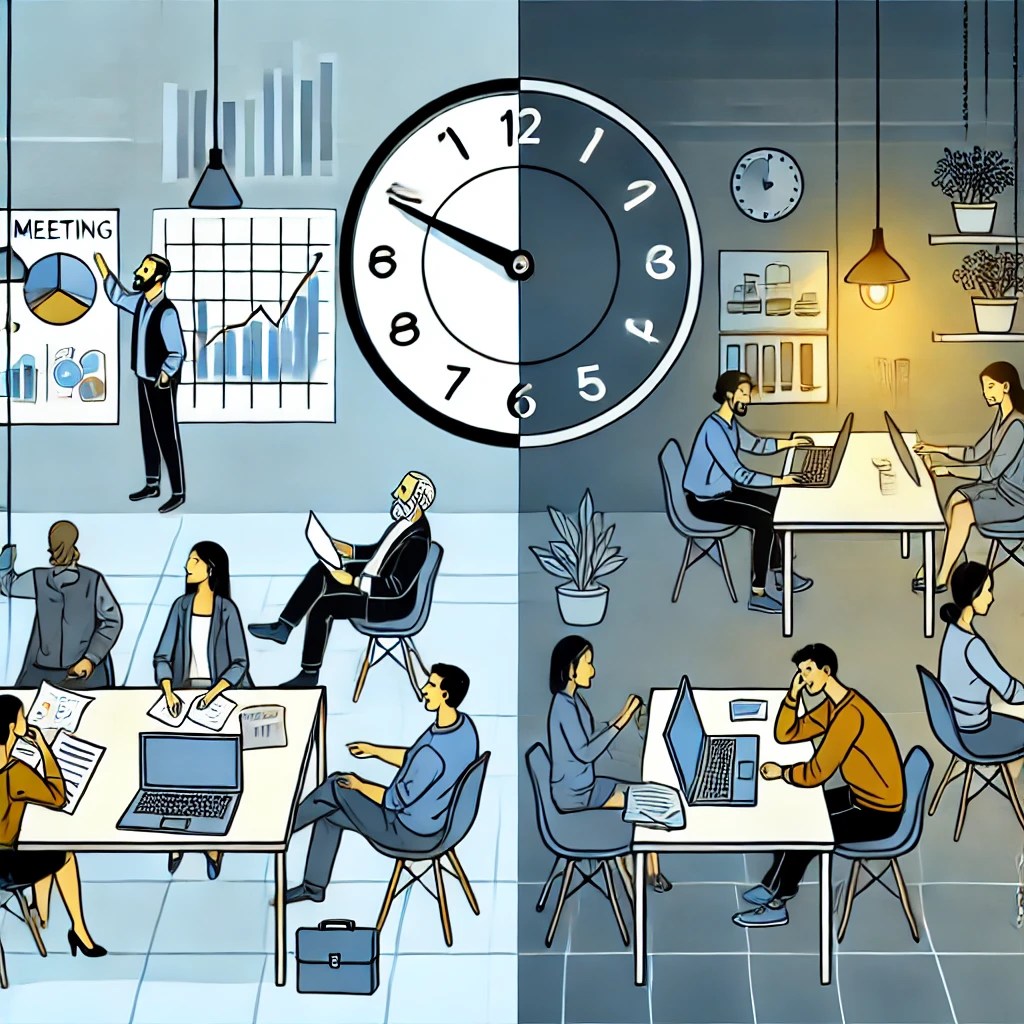
The interplay between setting up meetings and managing workflow is essential to ensure smooth operations, communication, and productivity in an organization. Both meetings and workflow processes must be aligned to maintain balance, avoid disruptions, and optimize efficiency. Here’s how they intertwine:
1. Coordination and Planning
- Meetings: Act as a platform for planning and coordinating tasks, discussing priorities, and aligning team goals. Regular team meetings, for example, help synchronize activities and set clear expectations for the workflow.
- Workflow: Efficient workflows are designed with tasks planned out in a logical sequence. If meetings are scheduled appropriately (i.e., not too frequent or disruptive), they provide necessary checkpoints without interrupting the flow of work.
2. Communication and Feedback
- Meetings: Serve as a structured environment to communicate updates, provide feedback, and resolve any issues. They allow stakeholders to clarify tasks, share progress, and adjust priorities.
- Workflow: Feedback loops are critical to a smooth workflow. Meetings enable teams to share insights or blockers in real-time, making necessary adjustments in the workflow for improvement.
3. Time Management and Balance
- Meetings: Can disrupt individual focus or task flow, especially if poorly scheduled. Too many meetings or long, unnecessary meetings can reduce productivity. Effective time management is needed to ensure meetings fit into the workflow without causing interruptions.
- Workflow: Needs uninterrupted focus time for task completion. Balancing meeting times to allow for this focus helps maintain the quality and speed of work, ensuring deadlines are met.
4. Collaboration and Decision-Making
- Meetings: Enable collaboration, brainstorming, and collective decision-making. Teams come together to resolve complex issues that might otherwise slow down individual work. These decisions then influence the subsequent steps in the workflow.
- Workflow: Once decisions are made in meetings, they guide the progression of tasks and the assignment of responsibilities. Good meeting outcomes streamline workflow by eliminating confusion and driving progress.
5. Accountability and Tracking Progress
- Meetings: Regular check-ins (e.g., stand-ups, status updates) provide opportunities to track workflow progress, set accountability, and identify areas that need more attention or resources.
- Workflow: These meetings feed directly into the workflow, as they help teams recalibrate their efforts, reassign tasks, or adjust deadlines as needed.
Best Practices for Harmonizing Meetings and Workflow:
- Schedule thoughtfully: Time meetings during natural pauses in the workflow (e.g., after a milestone) to avoid interruptions.
- Clear agendas: Keep meetings focused and goal-oriented to minimize time waste.
- Leverage technology: Use collaborative tools to minimize the need for unnecessary meetings, keeping communication streamlined.
- Time-blocking: Encourage time-blocking practices where team members dedicate specific time slots for focused work and meetings.
- Frequent but short check-ins: Instead of long meetings, opt for shorter, frequent meetings to reduce disruptions.
In summary, meetings and workflow must interconnect in a way that promotes effective communication, decision-making, and collaboration, while preserving the time and space needed for focused, uninterrupted work.
Note: I am the CEO & Co-founder of Arrangr.com which can handle the issues detailed above.
 Adam Scott Perl
Leave a comment